Phone: +1-833-814-3833

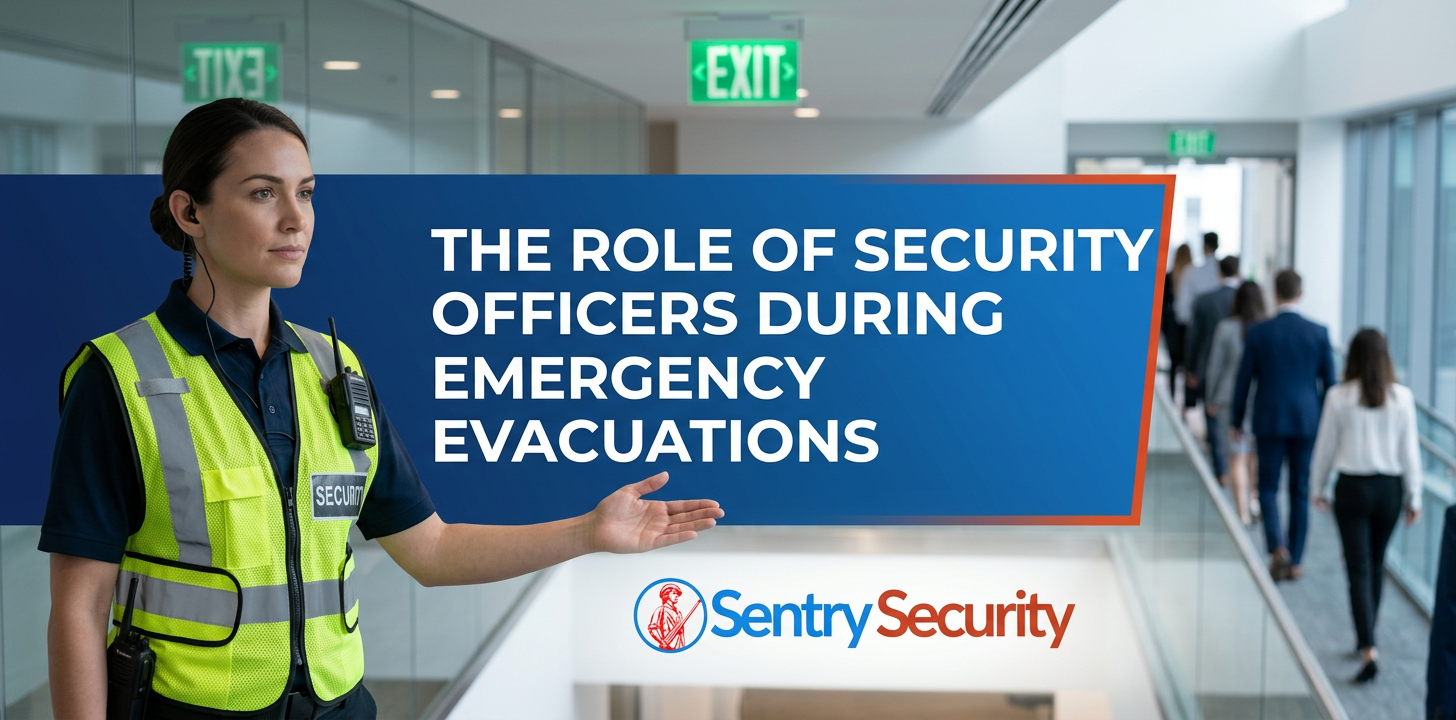
An evacuation can look simple on paper: sound the alarm, leave the building, and gather at a designated location. In a real emergency, the situation can be far less predictable. An exit may be inaccessible, visitors may not know where to go, employees may hesitate to leave, and emergency crews may need immediate information about the property.
Security officers can help bring structure to these situations. Because they regularly monitor entrances, common areas, parking lots, and other parts of a property, they are often well positioned to support an organized emergency evacuation response.
Emergency situations can develop quickly. Security officers may be among the first people on site to notice smoke, suspicious activity, an injured person, a blocked passage, or another potential hazard.
Their job is not to diagnose every emergency. Instead, they can report what they observe through established communication channels and follow the facility’s emergency response procedures.
Accurate information matters. Knowing which area is affected, which entrance is accessible, or where assistance may be needed can help management and emergency responders make better decisions.
People do not always react immediately to alarms. Some assume it is a drill. Others stop to collect belongings, look for coworkers, or wait for additional information.
Security officers provide a visible source of direction during these moments.
Based on the site’s evacuation plan, officers may instruct occupants to leave, point them toward approved exits, redirect them around restricted areas, and guide them to an emergency assembly point.
For organizations using Private security companies in St louis, evacuation responsibilities can be incorporated into site-specific officer duties and emergency protocols.
Moving a large number of people through a limited number of exits can create problems of its own. Hallways can become congested, groups can stop near doorways, and people unfamiliar with the property can move in the wrong direction.
Security officers can monitor evacuation routes and help maintain a steady flow of people.
This is especially important in properties with multiple floors, large workforces, public access, loading areas, or several separate buildings. Officers who regularly patrol the location already have practical knowledge of its layout, which can be useful if normal movement patterns suddenly change.
Not everyone inside a property is a regular employee.
There may be contractors working in a utility room, customers in a waiting area, delivery drivers near a loading dock, or visitors attending a meeting. Some occupants may also require additional evacuation assistance.
Security officers can help direct these individuals according to the facility’s emergency action plan. Visitor logs, access records, and information from reception or management may also help identify people who were present before the evacuation began.
One challenge can continue after occupants have reached the outside: re-entry.
Someone may want to retrieve a phone, laptop, medication, vehicle keys, or another personal item. Others may believe the emergency is over simply because they cannot see an immediate danger.
Security officers can support perimeter control by restricting entry to affected areas and directing occupants to remain at designated assembly locations until authorized personnel provide further instructions.
They may also keep driveways, entrances, fire lanes, and other access points open for emergency vehicles.
Firefighters, police officers, and emergency medical teams arrive ready to manage the incident, but they may not know the property.
On-site security personnel may be able to provide practical information such as:
Security officers should remain within the responsibilities defined by their training and the facility’s emergency procedures. Once public emergency agencies take control, officers can support their directions rather than interfere with emergency operations.
Reaching the parking lot or assembly area does not automatically mean the evacuation process is complete.
Security officers may assist with occupant accountability, report unusual activity around the property, maintain restricted zones, and relay information between facility representatives and emergency personnel.
After the incident, observations from security staff may also help management review how the evacuation went. A congested exit, unclear instruction, unlocked restricted door, or confusion at an assembly location can point to areas that should be addressed before the next drill or emergency.
Security officers cannot wait until an alarm sounds to learn their responsibilities. Familiarity with emergency exit routes, assembly locations, communication methods, access points, and facility procedures gives them a clear framework to follow during an actual incident.
Regular drills also give security teams and employees an opportunity to practice their roles and identify gaps in the evacuation process.
Emergency response is one part of a broader on-site security strategy. Sentry Security provides trained private security officers who can support access management, property monitoring, incident response, and established emergency procedures.
For businesses looking for professional security support in the St. Louis area, learn more about Sentry Security’s private security officer services and find the right security approach for your property.
Contact us today !